
[03]Applications
Where stone does the work.
Six common uses for construction stone, with simplified cross-sections showing where each material typically sits. These are general examples — not completed projects or engineering designs.
Layers that carry load
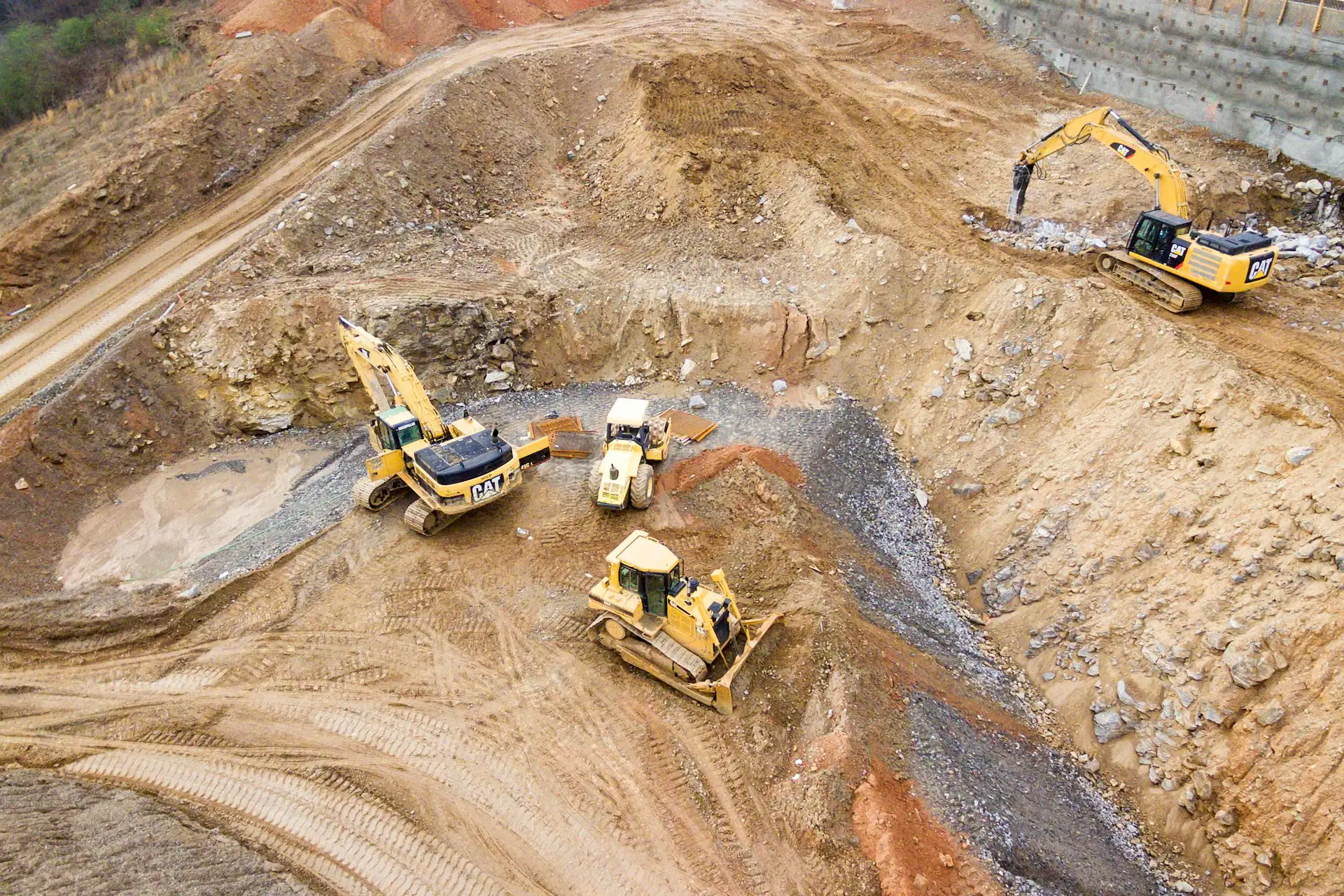
Road Construction
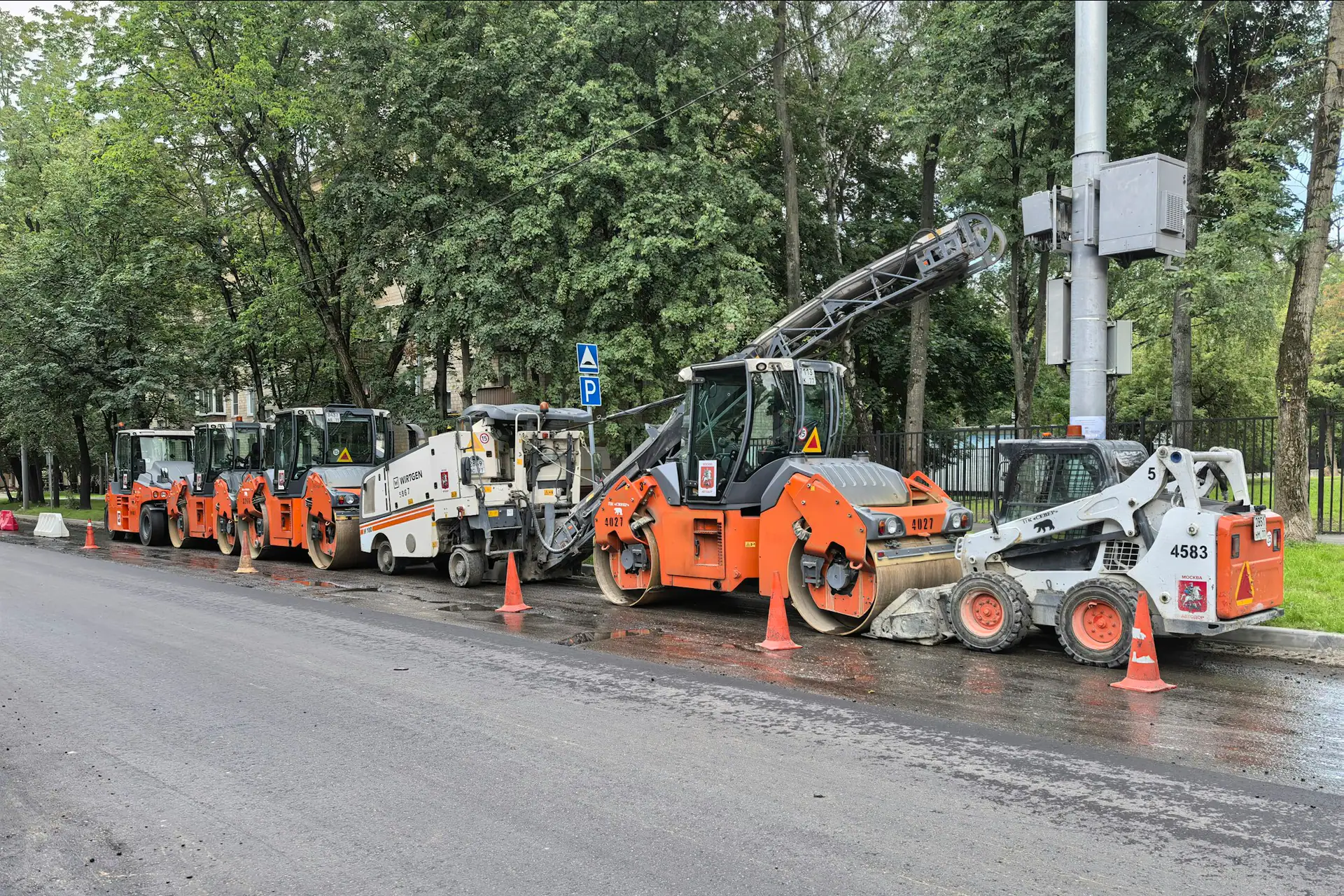
A road is a stack of compacted layers. Graded materials such as GSB and WMM form the sub-base and base, while crushed chips are used in surface courses. Each layer's grading is normally set by the project specification.
Materials to discuss
Useful to share
- Specified gradings for each layer
- Quantity per layer
- Site access for delivery vehicles
The coarse fraction
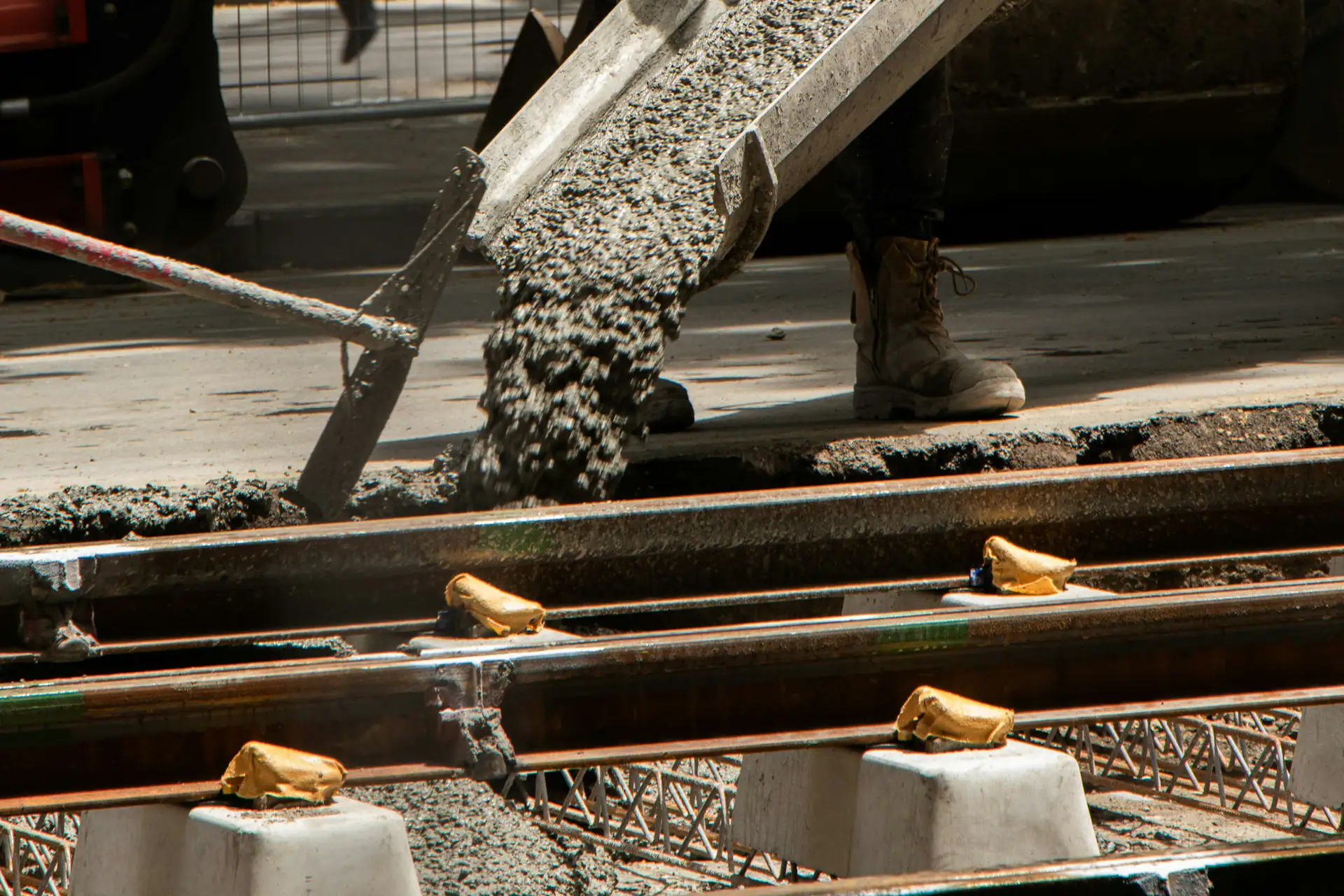
Concrete Work
Coarse aggregates such as 10 mm and 20 mm chips make up a large share of a concrete mix. The size and grading are chosen by the engineer or mix design for the element being cast.
Materials to discuss
Useful to share
- Required aggregate size (e.g. 10 / 20 mm)
- Mix design or specification, if any
- Total quantity for the pour
Below ground level
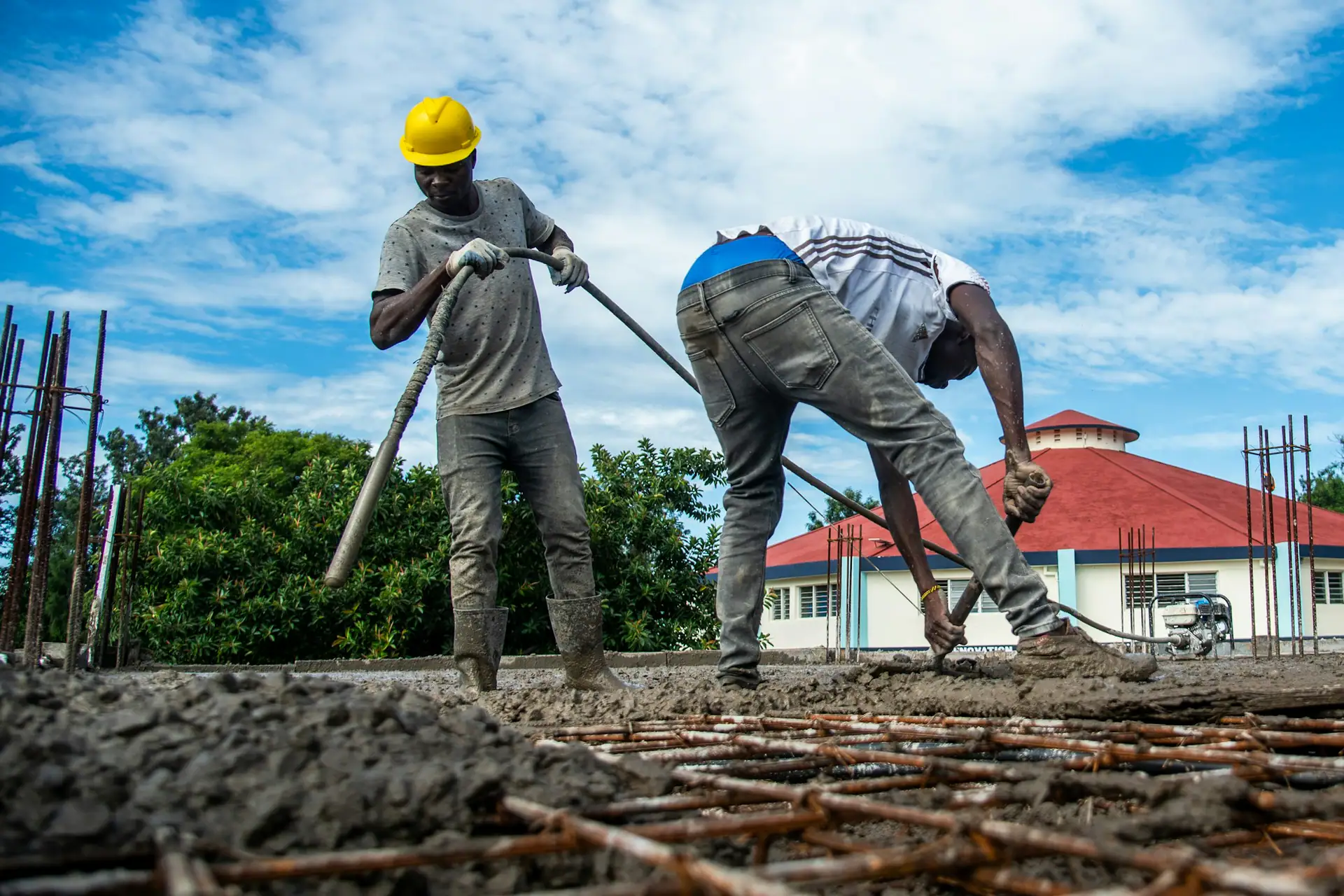
Building Foundations
Foundations commonly use boulders or 40 mm stone for soling, coarse aggregate in plain cement concrete (PCC) and footings, and rubble stone for masonry foundations.
Materials to discuss
Useful to share
- Materials for soling, PCC and footing
- Approximate quantities
- Delivery to site and timing
Public-scale works
Civil Infrastructure
Larger civil works use stone in many forms — boulders for protection and retaining work, coarse aggregate for drainage layers, and graded material for embankments and approaches.
Materials to discuss
Useful to share
- Material types per work item
- Size ranges required
- Quantity and phasing
Preparing the ground
Site Development
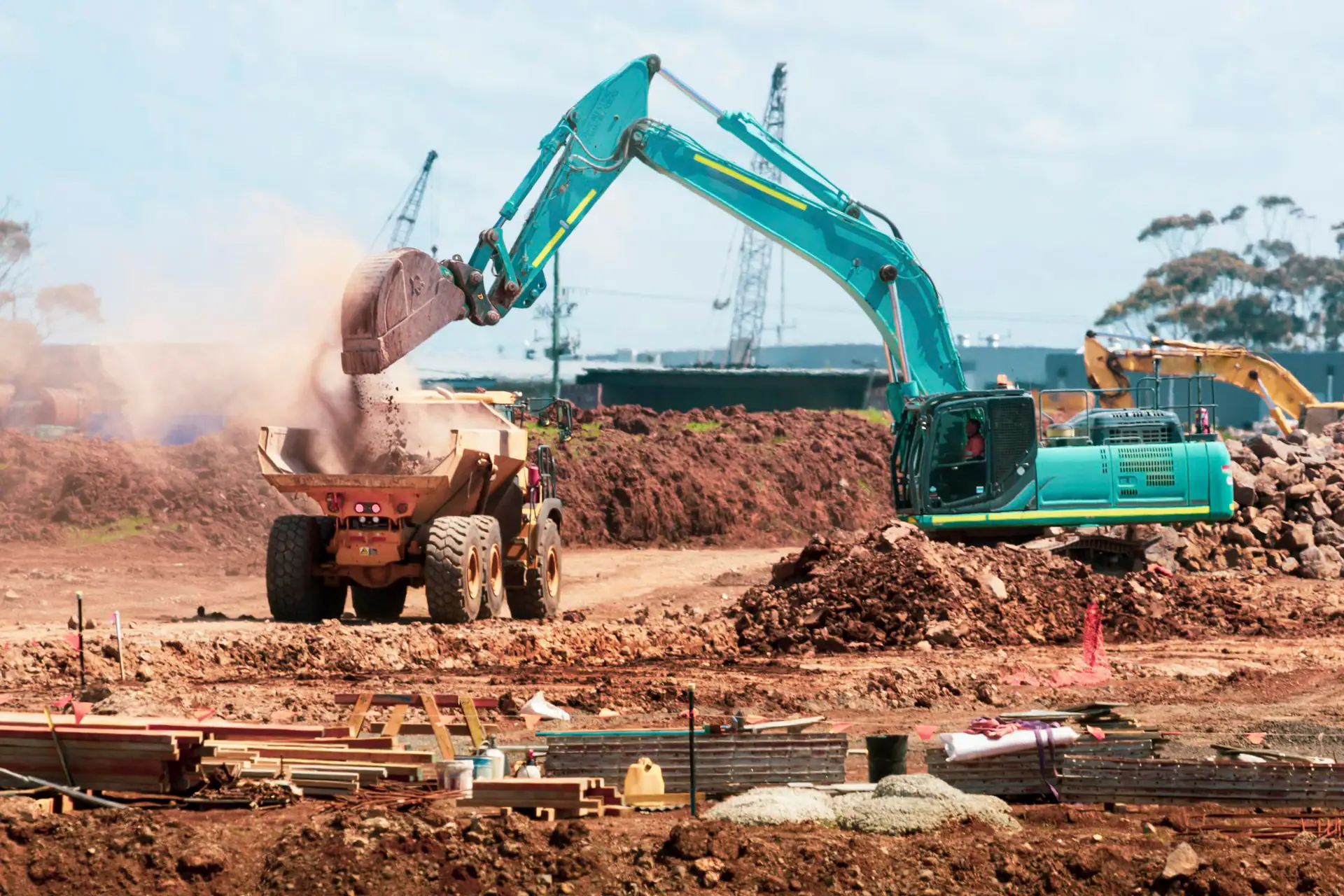
Before building starts, sites often need filling, levelling and temporary access. Rubble, 40 mm stone and stone dust are commonly used to build up and stabilise these surfaces.
Materials to discuss
Useful to share
- Area and depth to be filled
- Material preference
- Number of loads and access
Heavy-duty ground
Industrial Construction
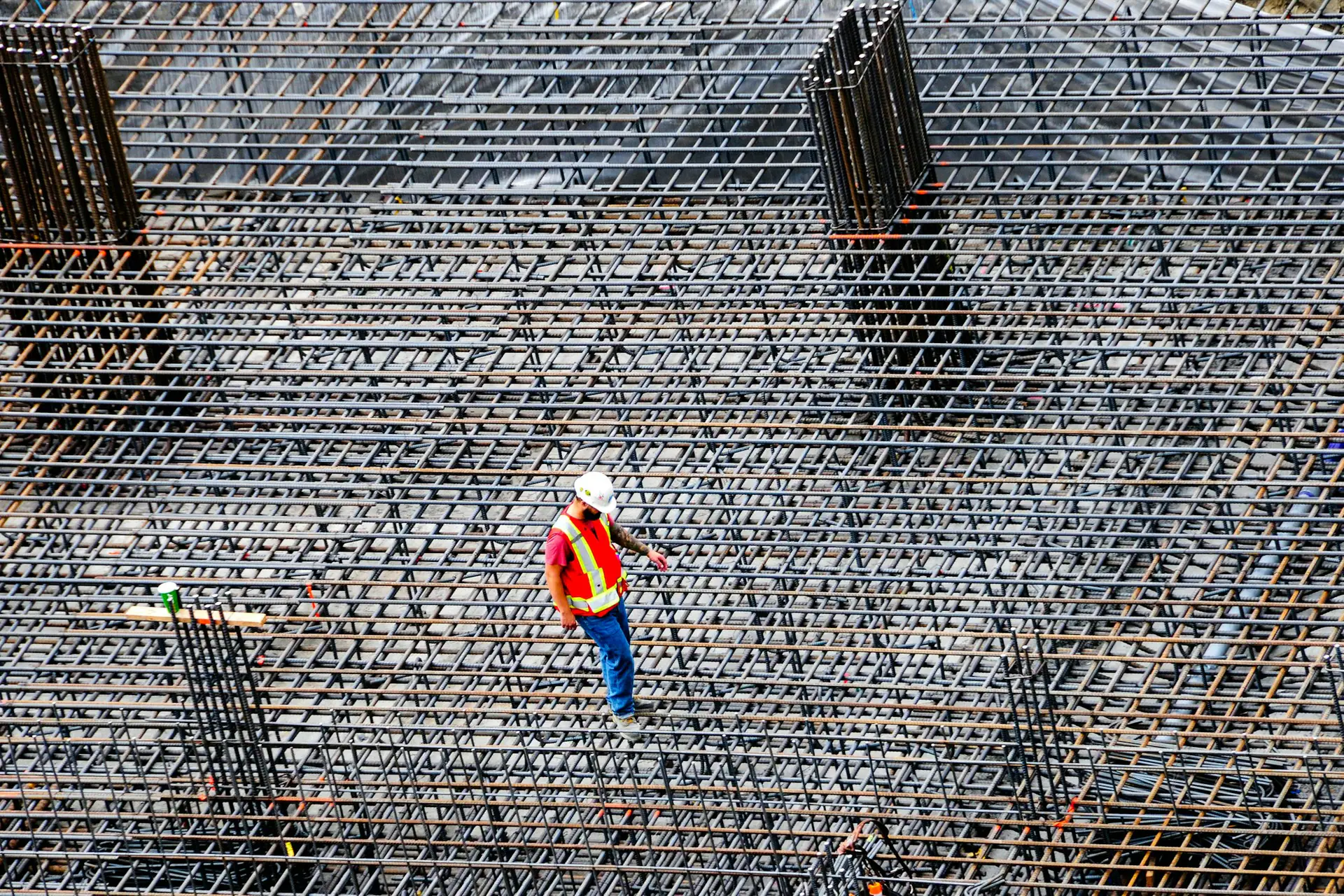
Industrial floors, yards and hardstandings are usually built on a well-compacted stone base, with concrete or paving above. Base gradings and thicknesses follow the project design.
Materials to discuss
Useful to share
- Specified base materials
- Area and layer thicknesses
- Delivery scheduling
[ Final ] — Start the conversation
Your next project starts with the right material.
Send your requirement on WhatsApp or call +91 98246 02234. We will discuss materials, quantities and delivery with you directly.